

Rails Across Europe
Rail once symbolised progress and modernity; today, it represents social equity and universal access. What would it take to reclaim its prestige?

Across wealthy societies, citizens no longer believe the future will be better than the past. The idea of progress as an inevitable historical force was born in the Western world – now it may be drawing its last breath there, too.
Illustration: Sophia Prieto
A dual obsession has long haunted Western civilisation: a persistent belief in progress coupled with a fear of one’s own inevitable collapse.
Europe’s imperial-age historians accentuated this tension well. Edward Gibbon’s 18th century classic The History of the Decline and Fall of the Roman Empire, written during Britain’s ascendancy to global empire, offered warnings to his contemporaries drawn from Rome’s collapse amid barbarian invasions, the decay of civic virtues, and the misapplication of resources. Oswald Spengler, writing at the apex of German imperial ambition in the 1910s, foresaw the decline of a Western civilisation as it entered its inevitable “evening” phase. Arnold Toynbee, writing later in the 20th century, offered his diagnosis of the Western condition as a schizophrenia of progress and doom inherited from Christian eschatology.
Broaden your horizons with a Futures Membership. Stay updated on key trends and developments through receiving quarterly issues of FARSIGHT, live Futures Seminars with futurists, training, and discounts on our courses.
become a futures memberThe same anxieties reflected in the works of historians appeared in the art and architecture of the European empires as well. Take architectural theorist Joseph Gandy’s depiction of the Bank of England – an emblem of the supremacy of European capitalism – as a ruin, projecting collapse into the future at the height imperial confidence. The same cane be said of Albert Speer’s vision for Hitler’s Berlin, planned in such a way that its buildings would make for aesthetically pleasing ruins after the collapse of the “Thousand-Year Reich”.
In philosophy, too, the dual obsessions with progress and decline have long coexisted. Contrast Enlightenment thinkers like Nicolas de Condorcet – sometimes described as the first transhumanist – and his conviction that “the perfectibility of man is truly indefinite”, with Nietzsche, the great romantic pessimist who diagnosed Western civilisation as exhausted, decadent, and heading toward nihilism. On one hand, the hope and belief that through reason, science, education, and institutional refinement, humanity can continuously ascend. On the other, its counter-intuition: the knowledge that beneath the veneer of rationality and progress lie deep resentments and instincts that push societies toward decay as often as toward improvement.
If the broader cultural cycles oscillate between atmospheres of pessimism and optimism, then we – in the Western world, today – must be in an era of pessimism. We see it all around in anxieties both real and imagined: impending climate calamities, AI doomerism, fears of birthrate collapse, dystopian depictions, cultural nostalgia loops, and nativist politics seeking to salvage a phantasmal past.
This sense of pessimism and decline also comes through in much more concrete terms, specifically in surveys of public sentiment. We don’t know what ordinary people felt about the future of their societies during the Enlightenment and Romantic eras – or if they even thought about these things at all – so we can’t know how well-aligned popular sentiments were with those of historians, philosophers, and artists. We have a much clearer picture of how that looks today.
A new population survey conducted by CIFS in Denmark – ostensibly the happiest country on Earth – provides a point of reference. Here, in this content and prosperous society, only a quarter (24%) of citizens feel that their descendants’ lives will be better than their own. A third (32%) believe it will be worse or much worse.
The declining confidence in the future observed in this small corner of the world is not surprising. In a 2025 Pew Research Center survey of 36 nations, the median response showed that 57% believe their descendants will be worse off than their parents, while only 34% expect them to be better off. The United States, Canada, France, Italy, the United Kingdom, the Netherlands, Sweden – across these affluent nations, substantial portions of the population believe that the best times are behind them, and that they must prepare for a future with more modest prosperity and fewer economic opportunities.
This economic pessimism is echoed in more general anxieties about the future. A March 2025 survey by Ipsos measured the future expectations of populations in 29 countries. Participants were asked to assess whether their country, broadly speaking, was heading in the right or wrong direction. In this study, too, populations in high-income countries were at the more pessimistic end of the scale.
The silver lining is that pessimism about the future isn’t universal – far from it. While much of the Western world has settled into an atmosphere of decline, ask the youth in Nigeria, Kenya, Mexico, or China, and the inverse is true; they will be more likely to look ahead with a sense of optimism bound to a feeling of collective self-confidence and agency. Another Ipsos survey from 2018 highlighted the contrast: more than half of adults and as many as 8 out of 10 young people aged 12 to 24 from low- and middle-income countries responded that they felt optimistic about the future, while only about half of young people in high-income countries felt the same way.
Why the contrast? Shouldn’t populations in rich and content nations feel better about their prospects, and those of their children, than people in poorer regions? It seems counterintuitive only until we recognise that expectations about the future are shaped less by absolute conditions than by perceived trajectories. Population surveys track mood, not destiny. And people’s moods are anchored in their past experiences, their present situation, and the future expectations these things engender.

Explore the world of tomorrow with handpicked articles by signing up to our monthly newsletter.
sign up hereImagine you are a 45-year-old living in Shenzhen, China. When you were born, the place was little more than a town. By your 30s and 40s you will have seen skyscrapers, metro lines, new neighbourhoods and major tech clusters emerge. Your city, with its population of 30,000 in 1980, is a now a sophisticated, high-tech metropolis home to 18 million. Yes, your country faces structural challenges in the future, including a rapidly ageing population, but you’ve experienced what’s possible – you’ve seen how quickly your surroundings and society can undergo transformations that have deeply affected your personal prospects. This experience is bound to shape your outlook.
Now imagine you are a person of the same age but living a mid-sized German city, where over the same decades, the urban fabric, infrastructure, and your personal prospects might only have changed modestly – the quality of some public services may have even declined. Your country, once the world’s premier industrial powerhouse, is currently in a recession, its share of global GDP is dwindling, its population is getting older, and concerns about security and the risk of conflict are returning to public life. In such a context, optimism about the opportunities of your children or grandchildren becomes harder to sustain.
Alongside economics, demographic change is another powerful force shaping whether societies feel they are moving forward or falling behind. High-income nations generally tend to be ageing nations as well, with top-heavy population pyramids that restrict productivity, burden the economy, and stifle the political power and sense of collective agency of the relatively smaller youth cohorts. China may be an outlier, ageing far earlier in its economic trajectory than high-income countries did – but its demographic challenges seem to have been out-shined by its unprecedented economic transformation, reflected in a public mood that remains markedly more optimistic than one might expect from its age profile alone.
In Western nations, the large baby-boomer generation that came of age during the explosive second half of the 20th century now makes up the old and pessimistic group that the smaller youth cohorts, facing vastly different challenges than their predecessors, will need to support. Darrell Bricker, CEO of Ipsos Global Public Affairs, put it in the following terms when FARSIGHT spoke to him in 2024:
“I think in developed countries, it’s young people comparing themselves to what their parents achieved, while in the developing ones, it’s to what their parents simply didn’t have […] You’ve got this group of young people – which is not as big or young as a lot of people assume that it is – feeling that they’ve been left out. Even if they are innovative or expanding their skillset, opportunities are not going to come as easily as they did to their parents or grandparents.”
Naturally, cultural differences matter as well. People in collectivist societies, such as Brazil, display levels of optimism that may not be wholly explained by economic or demographic indicators alone. Strong communal bonds may buffer individuals against interpreting personal or professional setbacks as signs of deeper failures. A cultural sense of resilience – traditions of finding hope amid adversity – may further nurture an optimistic mindset. And living in lower-income or more unstable environments may strengthen this resilience and adaptability when facing an uncertain future. Even so, a broad pattern remains unmistakable: optimism clusters in low- and middle-income nations, while pessimism increasingly characterises the wealthy world.
In Western culture, the question of what visions of the future are on offer for disenchanted youth has few inspiring answers. They may latch on to the most boldly futuristic imaginings – of Mars colonies, transhumanism, and digital superintelligence – formulated by a tech-elite that nevertheless seem more interested in accumulation and self-preservation than in fundamentally rethinking society. More likely, they will join the rising chorus of nativist populism currently sweeping the Western world, rooted in a desire to mirror the future on the past. If they are on the left politically, climate change likely figures centrally in their imaginings as a looming dark cloud that stifles hope and optimism and severely limits what the future could become. A lack of visionary politics, in any case, is something that seems to unite people of all ages and political stripes. In Denmark, more than half of the population say that political projects aimed at long-term change are lacking in the political debate.
Europe, the birthplace of the idea of progress, may indeed be entering it’s “evening” phase – at least in the conceptions of Europeans themselves. Plagued by war, economic stagnation, and a general atmosphere of decline, the posture vis-a-vis the future has become noticeably reactive. The realisation that Europe is eclipsed economically and technologically and must find a new place in a world where other powers dictate the terms is evident, yet a sense of indecisiveness nevertheless prevails. We see it in hesitancy of European leaders struggling to counter Russia and feeling caught between an unpredictable USA and an imposing China.
The future – once a space of expansion and opportunity – is increasingly seen as a canvas for conservation: of the crumbling welfare state, of a deteriorating biosphere, of the Union’s outer borders, and of geopolitical, technological, and economic sovereignty amid the ‘rise of the rest’. Progress is no longer measured chiefly by what can be achieved, but increasingly by what can be preserved and restored.
In Denmark, perhaps the most significant political achievement of the 2020s so far has been the Trepartsaftale (Tripartite Agreement), which imposed a worldfirst carbon tax on livestock farming and took measures to rewild landscapes and restore the country’s heavily abused coastal ecosystems. The initiative gathered support across the political spectrum and was, simultaneously, ambitiously forwardlooking and thoroughly conservationist.
Measures like this could even be said to go against the very notion of progress first formulated in Europe. Starting at the dawn of capitalism in the 16th century, waves of land appropriations were justified in the name of productivity. The enclosures of common lands and wild landscape – vestiges of a more wasteful past – reflected a new ideology of improvement best illustrated in John Locke’s principle that ownership of the Earth should go to those who could make it productive. By contrast, today’s land appropriations – of private lands by the state – aim instead to return land to forest and nature. In effect, the state now seeks to undo the very historical processes that helped shape capitalism itself.
Perhaps the pessimism we see today is merely a passing phase and subject to change. If atmospheres of decline and progress come and go in cycles, our moment may be as transient as the economic tides that help shape it. Demographic patterns are slower to shift, but historical contingency will inevitably upset expectations in other areas.
Or perhaps pessimism in otherwise wealthy and content countries should be understood as a historical correction – a pause after decades of historically unprecedented and ultimately unsustainable expansions of prosperity. The “great acceleration” of the 20th century may have been the anomaly; the more tempered expectations of our time may simply reflect a return to a long-term norm.
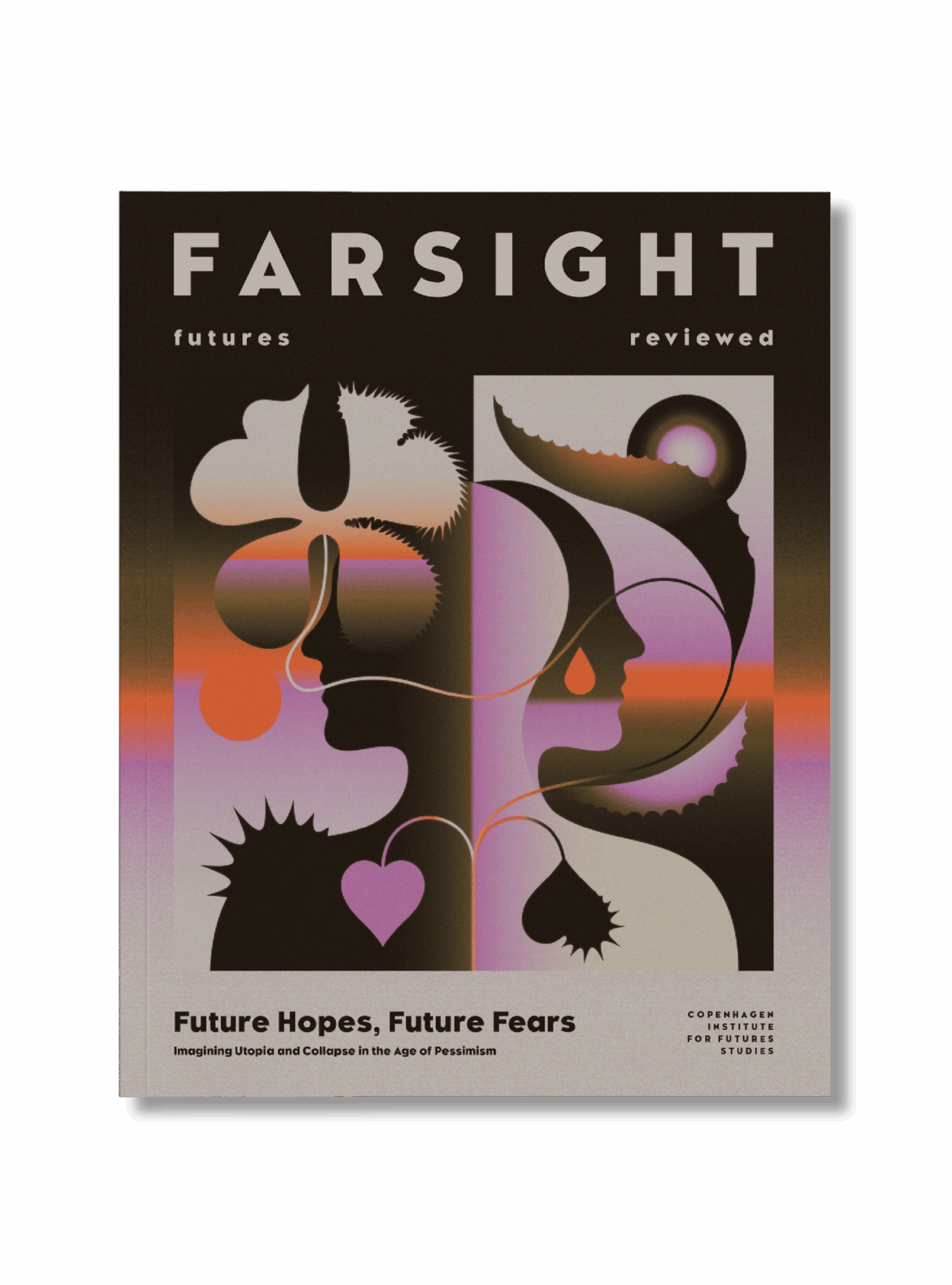
This article was first published in Issue 16: Future Hopes, Future Fears