Why We Feel the Future Differently
Q&A with Kerstin Preuschoff and Ewa Lombard, neuroscientists at the Laboratory for Uncertainty, Collective Intelligence & Decision Making.
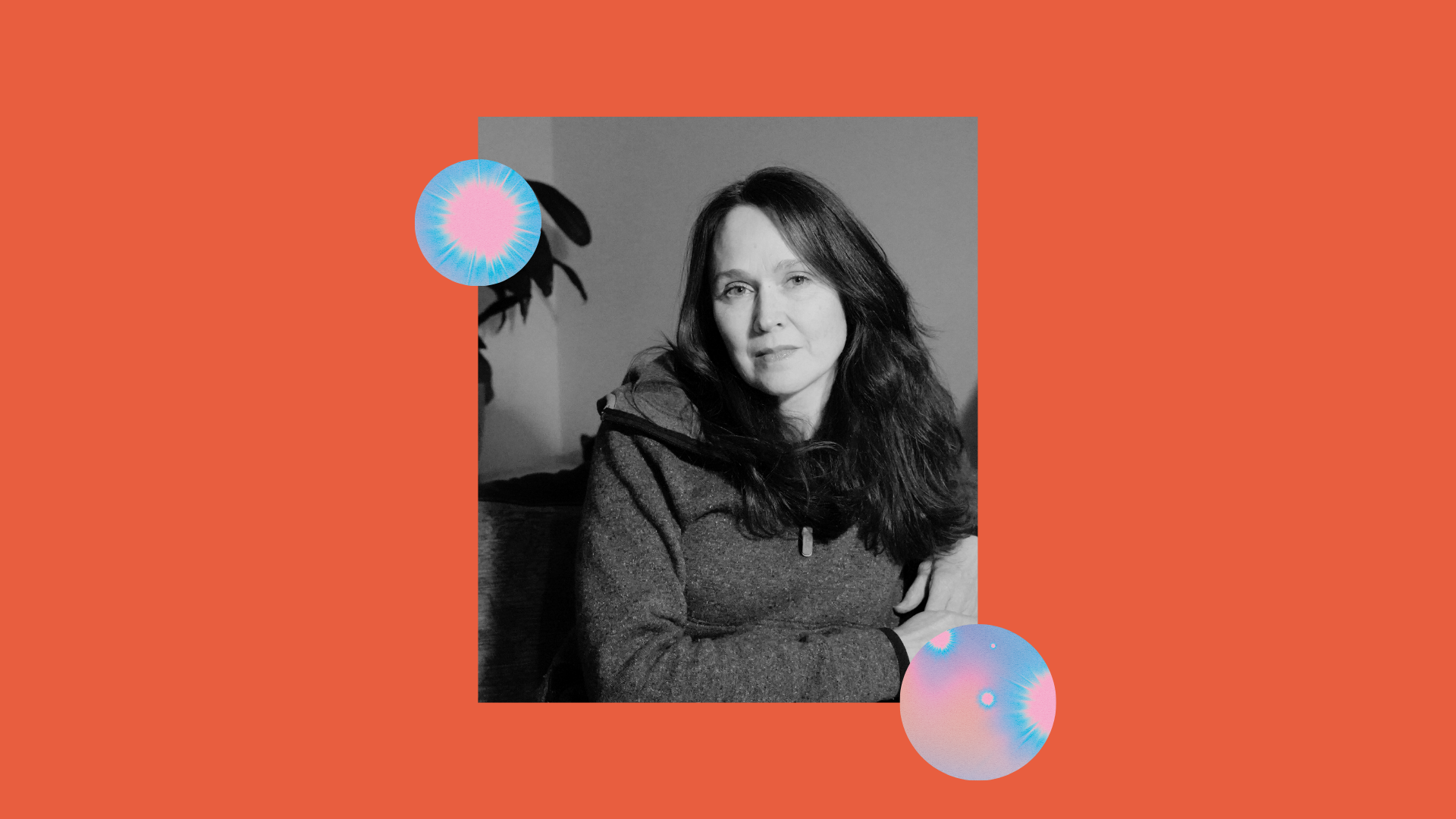
Renowned anthropologist Sarah Pink explains why the sensory and embodied experiences of everyday life should take a more prominent role in imagining possible scenarios.
Anthropology has traditionally been concerned with the past and present – studying cultures, practices, and meanings – and has relied on patterns of behaviour that can be observed, or past remains that help us document human culture. The future – non-existent, non-observable – has naturally been absent from the anthropologist’s field of view.
Over the last 10-15 years, this has started to change. More anthropologists now look consciously to the future, taking an interest in traditionally futurists concepts like ‘uncertainty’ and ‘possibility’, as well as the more mundane everyday life aspects of the human experience that are often absent from more traditional futures inquiries, but which nevertheless will make up the foundation for life in the future just as it does for life today.
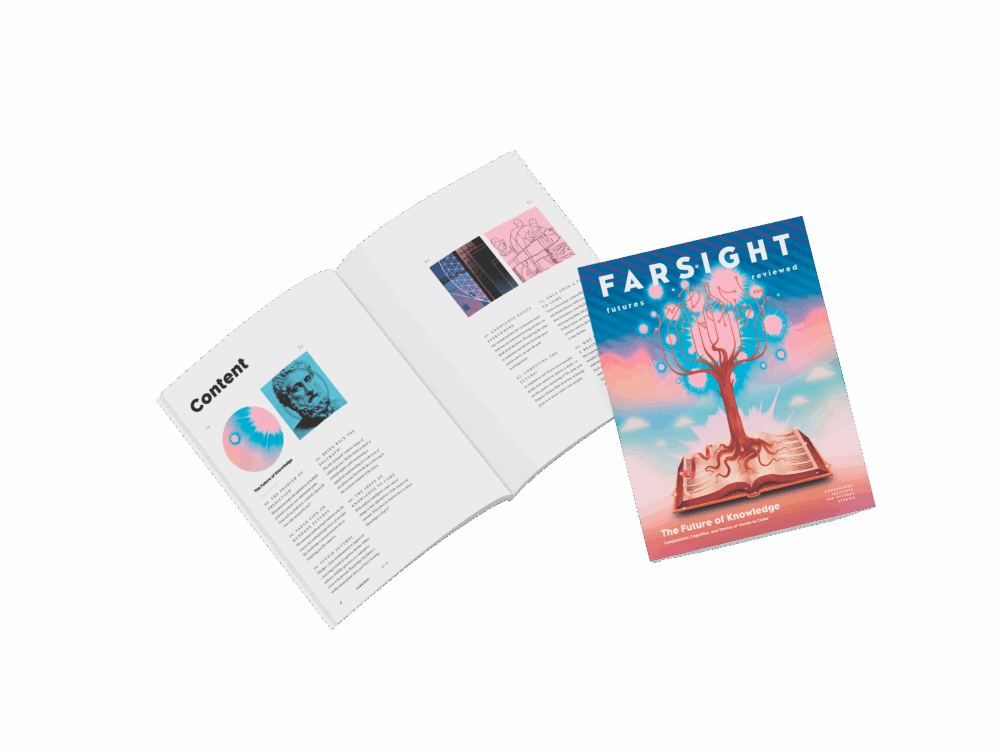
Broaden your horizons with a Futures Membership. Stay updated on key trends and developments through receiving quarterly issues of FARSIGHT, live Futures Seminars with futurists, training, and discounts on our courses.
become a futures memberHow will people’s daily lives be different in a world deeply affected by climate change? How would ordinary people like to feel in 2050 – and how can we use that knowledge to put us on track for these desirable futures? Questions like these, that take the lived experiences of future people as their starting point, can uncover insights that more macro-oriented and top-down forms of futures research fail to capture.
Sarah Pink, futures anthropologist, Laureate Professor and Director, Emerging Technologies Research Lab & FUTURES Hub, Monash University in Melbourne has been a leading voice in this reorientation. Her research uses methods from anthropology and ethnography to investigate futuristic topics such as AI automation, and robotics across fields including energy, autonomous vehicles, homes, work, and cities – all from a decidedly humanist perspective.
Tamira Snell, futurist and sociologist at the Copenhagen Institute for Futures Studies, met with Pink over a video call to learn more about what previously hidden parts of the future come into view when we consciously foreground the human experience in it.
I must admit that I have really been looking forward to talking with you. As a social scientist working with futures and foresight, I see so much value in this meeting of disciplines. But it’s also clear to me that the way we think about the future sometimes struggles to capture the ‘social’ aspect of it, including how humans will experience that world. My humble hope is that you can help me cover all my own blind spots in the way I approach these two fields and have tried to bridge them.
But before we get to that – how did you get interested in working with the future in the first place?
It was really a configuration of a few different things that came together over time. From around 2005, I did research on the Slow City movement [an international movement promoting peaceful, high-quality way of life, and ‘slow’ cities, ed.]. It made me interested in how the towns that joined the movement would be writing or performing themselves into a possible future.
Around 2010, I started to work on another project in collaboration with designers. Design is another future-oriented discipline, and the collaboration led me to become interested in concepts like uncertainty and possibility in relation to the future.
I became especially interested in the question of how to harness uncertainty to invite people to think about, perform, understand, and to sense possibility in new ways. When approached in this way, uncertainty shifts from being something to be mitigated, as we often see in relation to governments and organisations, to becoming a way to investigate possibility and futures in a more speculative way.
Through these projects, questions started to arise around how to design for people who may live in these possible futures. That line of questions continued in my later work looking at possible futures of self-driving cars, possible city futures, and possible mobility futures, bridging new technology with design, anthropology and the social science disciplines.
A new phase of my work in futures has emerged through the Digital Energy Futures project, which explores how everyday life – shaped by digital and emerging technologies – might transform future energy demand. I aim to continue developing new models of foresight that are attuned to the complexities of everyday life – and that foreground the social, cultural, sensory, and material realities that shape our energy futures.
I’d like to know more about how you approach uncertainty in your research. It’s a concept we also work with at the Institute in our foresight work. Here, it becomes a way to focus the conversation on the most crucial factors – critical uncertainties – whose outcome is estimated to greatly impact the future of an organisation, company, group, or individual.
In my experience, this emphasis on uncertainty becomes a balancing act because uncertainty almost always creates some degree of discomfort. It’s often considered a bug – something to be mitigated, like you say. We try to frame it instead as a feature, as a prerequisite to understanding and preparing for the future space of possibilities and plausibility. It requires we become aware of the discomfort experienced when exploring possible futures that include less preferred ones.
I have collaborated to seek to unfold uncertainty as a method through which to invoke both speculative investigations of futures, and to focus in on the values and priorities which might shape possible future life.
I think one of the interesting things about uncertainty is how, in more experimental and speculative research, we might harness it creatively, generatively and productively, to create modes of departure from the way in which people tend to currently understand possible futures. This kind of method enables people to imagine futures different from those that exist in the dominant narratives we are exposed to. People find it very difficult to detach themselves from these narratives and the assumptions that frame them.
Explore the world of tomorrow with handpicked articles by signing up to our monthly newsletter.
sign up hereI also employ other concepts as part of a suite of prisms through which to understand how people sense and engage with and in possible futures, including concepts of trust, care, and anxiety.
In that sense, imagining alternative futures also needs to build on an awareness of the blind spots and cognitive biases that come from these narratives.
When working on a time horizon of 10-15 years, as futurists often do, it’s difficult to disentangle the future from the present – the future very easily becomes an extrapolation of today. At the same time, we need to connect the everyday life experiences that people might have in the future to the ones they have now, so we don’t want to completely disconnect the two. This balancing act, I feel, can sometimes be challenging. How do you approach this?
For me, it is a continual process of methodological experimentation. Currently, and based in my experience with visual ethnography for generating tacit and embodied knowledge, I’ve been redeveloping the video tour and video reenactment methods which I started out with around twenty-five years ago. The tours and reenactments focused on engaging with people’s actual everyday lives to seek to understand what is important to them, how they live, and what their routines are like.
Now I’m in the exciting process of translating those methods for futures research. I have developed what I am calling the pre-tour and the pre-enactment, where we ask people to take us on a tour of their home and enact their possible future routines in 2050.
We set up the experiment with some pre-defined parameters. These could include projections for how many days will be above 40 degrees Celsius in 2050, or what we think the air quality might be like. We then ask the participants to imagine those and other elements of future life in their homes as prompts.
A lot of things become super interesting in that context. How might people use windows differently? If you have a 40-degree window, might you use that to dry your laundry indoors? How might they reorganise their space or use the rooms of their home differently? Will underground garages become cool rooms? Would patios or gardens be covered over? We are experimenting with applying this method to understand possible future life in homes as well as in city neighbourhoods, with some super-interesting outcomes.
I believe that through methods innovations like these we can arrive at a more sensory and embodied way of anticipating possible futures. The point is not simply to ask what we think we’ll do in those futures – but also to ask what we want it to feel like, emotionally and sensorially, to live in our homes, to walk up the road in our city or neighbourhood, or to go to work.
And so why is that important? I if we can develop new methods to answer those questions, then we can create a whole new layer of knowledge about what futures people truly desire, be it in 2030 or 2050, and use that as a starting point for understanding how we might better plan ahead.
Can you tell me about the work that you are doing at the FUTURES Hub at Monash University, as it relates to Australia’s focus on becoming a top ten digital economy by 2030 and reach net zero carbon emissions by 2050?
Our research investigates how people will participate in shaping these transitions. There is a knowledge gap there, with regards to how people will live in possible futures and how everyday life will shape and influence the anticipated digital and net zero transitions.
We know very well that when new technologies and plans for net zero and sustainability transitions do land in everyday life, they won’t just shape society singlehandedly. The dominant narrative around technology tends to claim that it drives and shapes the future – but we know from many years of anthropological research that reality is more nuanced. When a technology emerges and comes into people’s lives, it’s very often reshaped by those who use it. And people use technologies – and any other product, of course – in ways that fit their own lives, ambitions, hopes, and aspirations.
I think there’s a real lack of understanding of the potential of the kind of foresight, futures knowledge, and future ways of knowing that we can deliver through anthropology. That knowledge is still missing from the contextual, top-down futures in foresight and futures studies – but the future is going to be just as mundane, just as boring or just exciting as it is now! The mundane is fundamental to our lives. It is what enables all the other things that we do, and this means that it also participates in shaping how futures come about and are experienced.
I think we have a tendency to focus on the knowns in society – the things that we can more easily imagine growing into future narratives, such as the possibilities inherent in technology. We pay less attention to, even underestimate, the diverse under-currents of cultural, behavioural and social change that might occur simultaneously. This also means that only a certain subset of the population has their worldviews reflected in the dominant narratives.
How can we anticipate and share desirable futures that reflect the aspirations of diverse groups of people, including ones who are often excluded from dominant narratives and tech-focused scenarios?
The reason I founded the Emerging Technologies Research Lab (2018 at Monash University, before FUTURES Hub) was because we wanted to complicate the dominant narratives that assume that technologies will shape society. So, the question right from the outset was how people will participate in shaping technology futures.
In that quest, we seek to do research across diverse groups of people in society. We seek to build patterns and follow threads that represent not a particular voice or a specific group of people, but which can characterise lived experiences, actions and aspirations across diverse groups and their everyday lives in society.
The principle is to seek to deliver new knowledge which acknowledges diversity, to subsequently be able to inform planning for possible futures for the most diverse group of people. This takes me directly to the question around ‘just’ transitions to sustainable futures, and to what a just transition is. We must also consider that possible futures will feel differently for different people, and ask if those different futures come into conflict.
Beyond the question of how people will shape futures, there is also the question of how future environments and contexts will shape our futures with us. What part will other species besides humans play? So, again, in terms of the knowability of futures, all those very different circumstances and agencies will co-constitute futures with us.
We are not moving forward alone, and I hope we as futures anthropologists can play a helpful and useful role in understanding and potentially moderating the way that futures are co-constituted as we see them emerging. The more that we can understand about how futures come about, the more we can participate in the process of enabling inclusive, safe and sustainable futures.
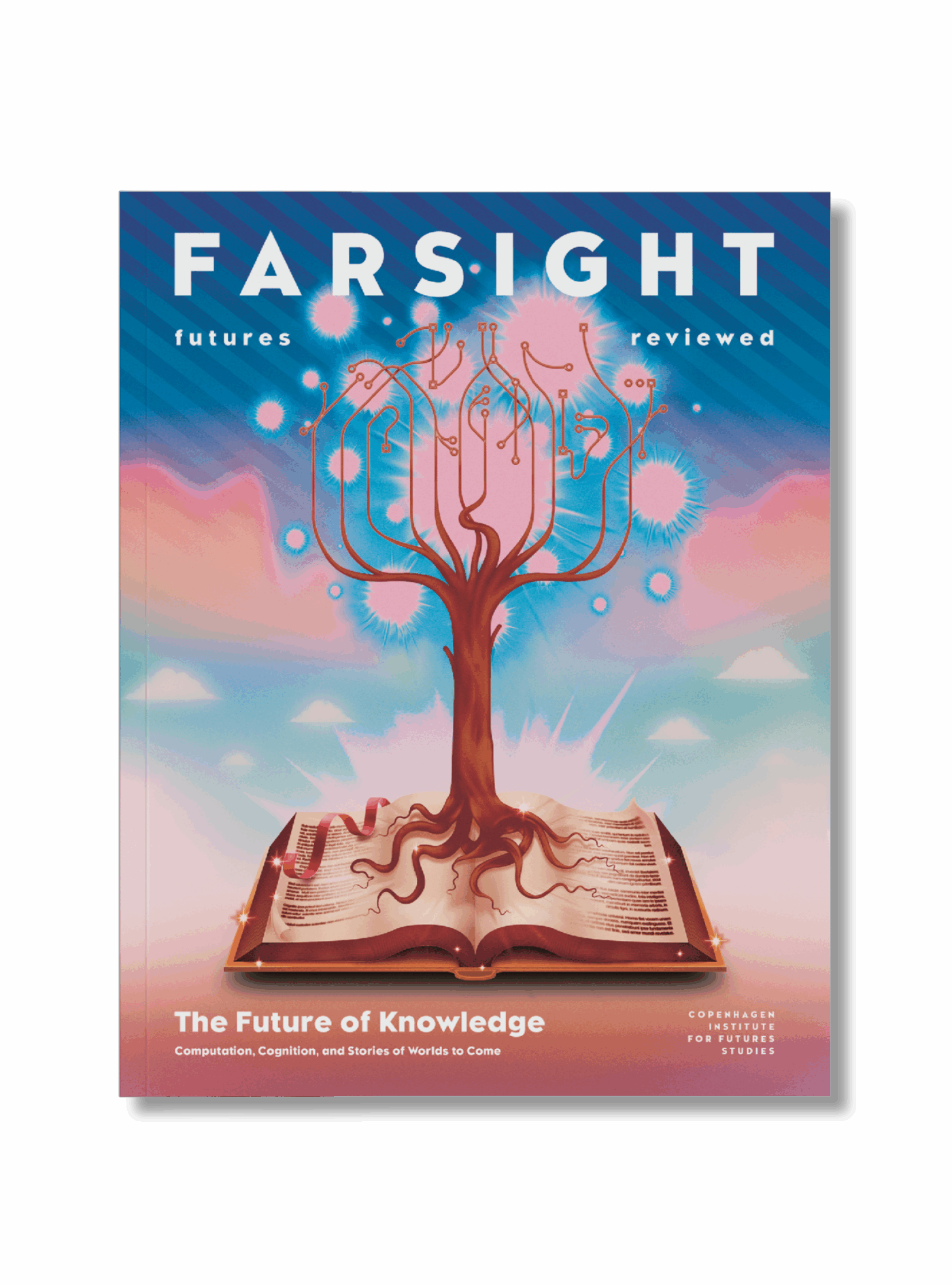
This article was first published in Issue 15: The Future of Knowledge