Why We Feel the Future Differently
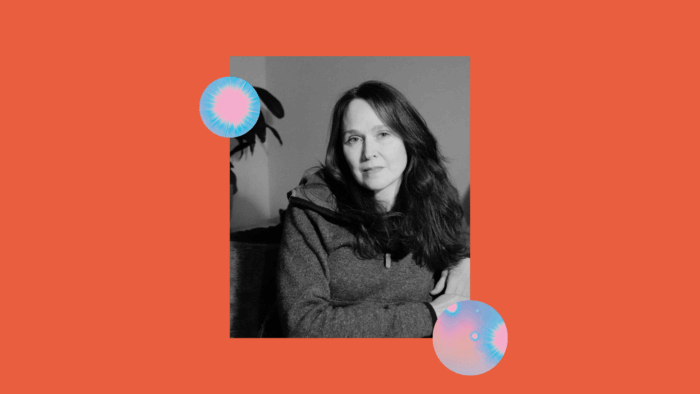
Q&A with Kerstin Preuschoff and Ewa Lombard, neuroscientists at the Laboratory for Uncertainty, Collective Intelligence & Decision Making.
Most futurists prefer the exploration of multiple potential scenarios over determinate paths. Some will say prediction is entirely impossible – but is this necessarily true?
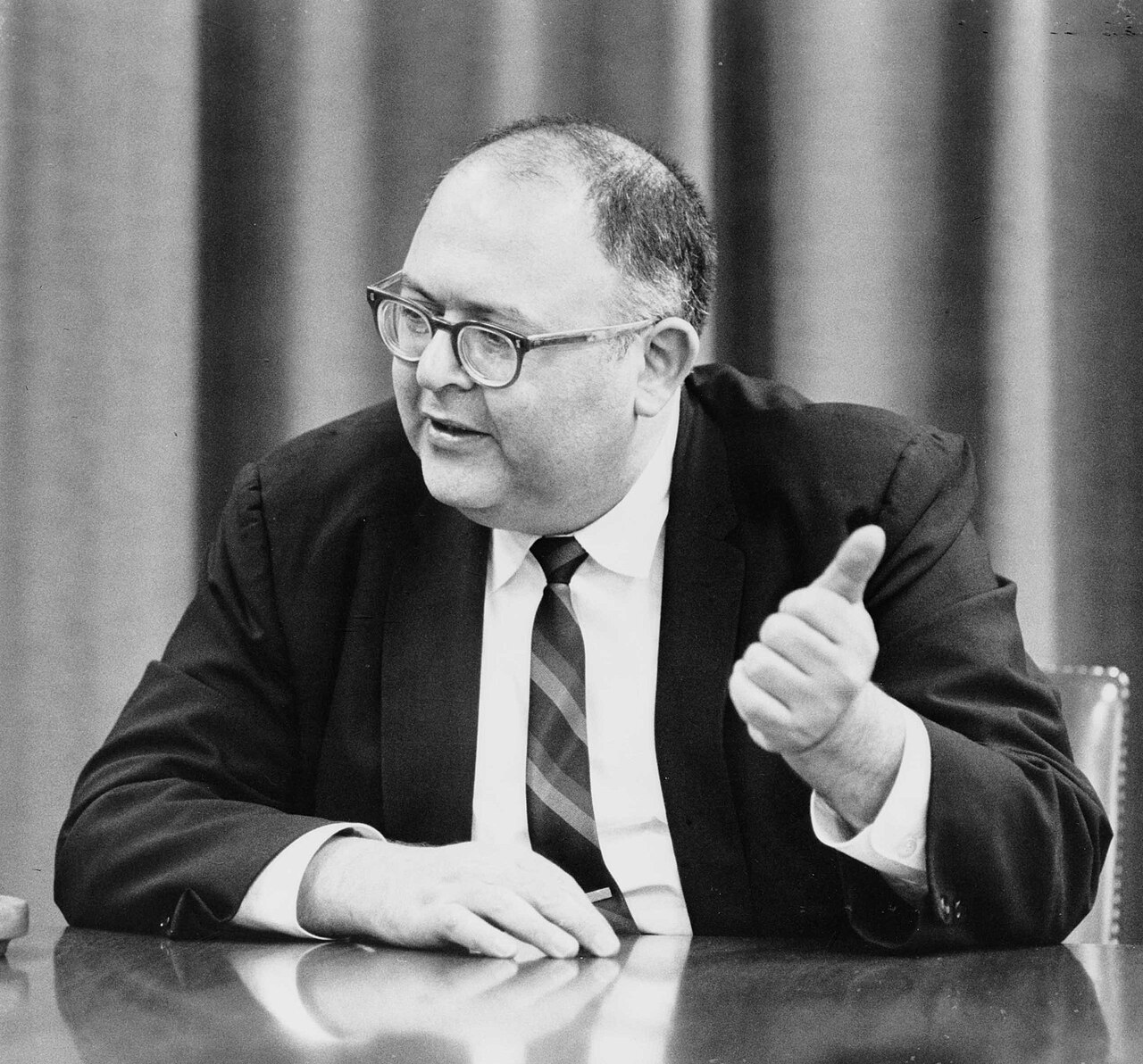
Picture: Herman Kahn, 1965, (O’Halloran, Thomas J)
Prediction is very difficult – especially about the Future. Such goes an old proverb that is often ascribed to the Danish humourist and inventor Storm P., although its exact origin is somewhat uncertain.
Within the domain of Future Studies, this contention may allude to the idea that there are key elements about the future which makes it inherently uncertain and unpredictable. Unsurprisingly, history offers many examples of flawed attempts to forecast future developments.
Broaden your horizons with a Futures Membership. Stay updated on key trends and developments through receiving quarterly issues of FARSIGHT, live Futures Seminars with futurists, training, and discounts on our courses.
become a futures memberOne such famous example comes from Swedish military history. In 1830, the Swedish Navy planted more than 300,000 oak trees at the island of Visingsö with the intention of using them for shipbuilding. As things turned out, however, the trees were never used for this purpose. When the oak trees were finally ready to be harvested in the 1970s, the use of wood in military shipbuilding had long since been replaced by iron and steel. The Swedish Navy had failed to consider the Industrial Revolution and its technological derivatives.
There are, of course, also examples of successful forecasting. One often-cited case is Herman Kahn’s book The Coming Boom, Economic, Political and Social, which was written in the early Reagan years. Here, Khan successfully anticipated a future of progress and free-market capitalism for the remaining part of the 20th century.
Beyond that scope, Kahn’s predictions did have their limitations, as he was neither able to foresee the rise of global jihadism, the growing risk of pandemics, or anthropogenic climate change as an existential threat to humanity.
A widely held position in future studies – in part supported by the findings of chaos theory – is that the further we move forward in time, the harder it is to predict the outcome of a given trend or process. Indeed, most futurists will shy away from prediction altogether, preferring exploration of multiple potential outcomes over forecasting of determinate paths. Some will tell you that prediction is, in fact, impossible.
However, depending on the scientific domain, this is not entirely true. Consider plate tectonics and planetary climate change. Our knowledge has advanced to the point where we can predict, with some accuracy, the position of the continents 80 million years from now, as well as the climate effects of those shifts. Combined with predictable factors such as Earth’s orbital patterns, we can even estimate atmospheric and evolutionary consequences.
Interestingly, predictions about the Earth’s climate 80 million years from now appear more solid than similar predictions about Earth’s climate in just 5 million years. Currently, we live in an interglacial period, which is itself part of a natural long-term cooling trend that has dominated the planet for the past millions of years, especially since the late Miocene (10.4–5 million years ago). This trend has led to more polar ice, lower sea levels, and decreased rainfall. Yet depending on greenhouse gas emissions from human activity, this trajectory could be disrupted, producing instead a much warmer world with rising seas, increased rainfall, and potentially ice-free polar caps.
We know with a fair amount of certainty that whatever the outcome of these events will be in 5 million years, the planet which awaits us in a 80 million years will be extremely hot and humid – conditions that may trigger another mass extinction, threatening species that have thrived under colder temperatures.
These examples are of course relatively disparate in terms of scope, domain of investigation, and the approaches and methods that are employed in the actual forecasting or predictions. Together, they attest to the fact that what we lump together as future studies is in fact a multidisciplinary community of experts with all sorts of backgrounds and areas of expertise. To this, one might add that many areas of interest to futurists are hybrid in the sense that they encompass a mixture of human agency, various socio-technical practices, infrastructures and artefacts, as well as natural physical and biological systems.
Given these conditions, one might wonder whether there is anything general at all which can be said about the nature of prediction in future studies. For what kind of claims can (or cannot) be made subject to reliable predictions? How should one approach these predictions methodologically? And how should one assess the limitations of those same predictions?
Here, Donald Rumsfeld’s epistemological distinction between different kinds of uncertainty is useful. As he noted, there are 1) the things that we know that we know; 2) the things that we know that we don’t know; 3) the things that we don’t know that we don’t know. To this we may add a fourth: tacit knowledge, or the things we don’t know that we know.

Explore the world of tomorrow with handpicked articles by signing up to our monthly newsletter.
sign up hereIt should hopefully be clear why a thorough assessment of these different kinds of uncertainty is pivotal to any futuristic fragestellung. Returning to Kahn’s predictions about the 20th century, it should be easy to see that they are severely limited in timeframe and scope, despite their apparent success. Although combining multiple areas of inquiry, including physics, nuclear strategy and the economic science, the visions of Kahn were in the long run overridden by developments – global jihadism; pandemic risks; anthropogenic climate change – outside his own knowledge areas.
Kahn also had his own blind spots and prejudices concerning (using Rumsfeld’s terminology) both the things that he knew that he didn’t know. One example concerns the possible consequences of pollution. Kahn may not have been a biologist or environmental scientist, but he did live in the same society as Rachel Carson, who voiced her environmental concerns in the bestseller Silent Spring from 1962. Regarding the things Kahn didn’t know that he didn’t know, issues like overpopulation and the disappearance of natural habitation were certainly on the agenda during his active years, yet it would seem the notion of a growing risk of pandemics as a consequence of reduced biodiversity and the resulting closer contact between zoonotic viruses, humans and their livestock – were not.
It’s probable that Kahn’s choice of focus on technological progress and global economic trends is a choice that reflects his own intellectual concerns and background. It highlights why critical self-awareness and self-reflectivity is a vital epistemological component in the process of making any claim about the future. In any case, Kahn’s blind spots tell us that we must be prepared for the possibility that even thorough and solid-founded predictions may be overridden by developments taking place entirely outside their initial aim of inquiry.
One might add that to this process there also belongs a critical reflection over some of the basic properties that we ascribe to the future. Within future studies we often see a tension between prediction and empowerment, and behind it, a perhaps even greater philosophical tension between the ontological notions of determinism and indeterminacy. This suggests a fundamental divide between seeing the future either as determinate and predictable or indeterminate and therefore changeable by human agency.
It would be tempting to conclude that the truth is probably to be found somewhere in between. However, that would be both intellectually dishonest and a case of excessive over-optimism. We live in a world that is abundant with nonlinear natural phenomena and sudden system failure. This, in turn, ought to make the presence of chaotic, indeterminate, but also uncontrollable events a major part of the dynamics of interest to any futurist worthy of the name.
The false dichotomy between prediction and empowerment overlooks the fact that systems may dysfunction or break down for reasons unrelated to human activity. A more credible assessment of this problem must therefore include the more pessimistic view that systemic dysfunction can undermine even the most causally plausible predictions.
How does one navigate all of this? Well, one answer which has by now probably been dangling in the lips of any futurist reader is scenario building. There are indeed many positive things to be said about this approach. First and foremost, it allows for the critical examination of various future trajectories as unfolded by a disparate set of premises and conditions. Secondly, it does not lock the investigation into a specific train of thought, allowing instead for a more open-ended inquiry. Thirdly, it offers epistemic transparency when it comes to understanding the consequences of specific parameters for future developments. And fourthly, it is also a key element in generating conclusions which may be employed within the domain of strategic foresight.
It is however worth noting that the critical potential of a scenario approach is not exhausted by merely setting up various descriptive alternatives without a thorough analysis of the credibility of their epistemic foundation. To put it more bluntly, there are typically some scenarios that are more plausible than others. It is in part also the job of the futurist (employing Rumsfeld’s epistemological categories in the process) to assess the plausibility of these scenarios whenever that is possible.
On a final note, it should be mentioned that the task of formulating a coherent epistemology of future studies is clearly a work in process. It is, for instance, still unclear how the various complementary approaches of prediction, empowerment and systemic dysfunction may be employed to reach a balanced understanding of the possibilities and limitations of forecasting the future. Another, and equally important task awaiting us, is how this framework may be employed in our efforts to prevent worst-case scenarios. The future is not only a candidate for our hopes and dreams. Sometimes, we merely wish to prevent it.
This article was first published in Issue 15: The Future of Knowledge